Boxer Dog: The Energetic Guardian with a Heart of Gold
Boxer Dog
Introduction
The Boxer is a medium- to large-sized dog breed that originated in Germany and is known for its muscular build, short coat, and exuberant personality. Boxers have a bold and athletic appearance, standing on strong legs with a broad chest and an alert, expressive face. They are high-energy dogs with an affectionate and playful nature, making them popular as family pets. Renowned for their intelligence and loyalty, Boxer dogs are also valued as working dogs in various roles. Thanks to their friendly temperament and protective instincts, Boxers have earned a reputation as loving companions who are gentle with children yet fearless when working or guarding. These key characteristics have made the Boxer a beloved breed for families and dog enthusiasts around the world.
History and Origin
German Roots (19th Century): The Boxer breed was developed in Germany in the late 19th century. Its direct ancestor was a German hunting dog known as the Bullenbeisser (meaning “bull biter”), which was a type of Mastiff used for hunting large game. The Bullenbeisser was a powerful, athletic dog employed by nobles and hunters to chase and hold prey such as boar, deer, and even bear. In the 1800s, German breeders began refining these dogs to create a more versatile and trainable breed. By the 1890s in Munich, the foundation of the modern Boxer was established through careful selective breeding. Three German breeders, Friedrich Robert, Elard König, and R. Höpner, are often credited with shaping the Boxer into a distinct breed during this period. The first Boxer breed club was founded in Munich in 1895, and Boxers were shown in a dog exhibition for the first time in 1896, marking the breed’s official debut to the public.

Bulldog and Mastiff Ancestry: The Boxer’s lineage reflects a mix of Bulldog and Mastiff ancestry. Early breeders crossed the sturdy Bullenbeisser with the Old English Bulldog and possibly other mastiff-type breeds. The Old English Bulldog contributed to the Boxer’s strong jaws and tenacious spirit, while the Mastiff-type background gave the Boxer its size, courage, and guarding instincts. This blend of ancestry produced a dog with the strength and bravery of a Mastiff, combined with the agility and slightly smaller stature of a Bulldog. Over time, the larger, aggressive bull-baiting dogs evolved into the more manageable and friendly Boxer breed we know today. The name “Boxer” is believed to have arisen because of the breed’s playful habit of standing on their hind legs and “boxing” with their front paws during play or conflict, a trait observed early in their development.
Evolution to Companion and Working Dog: By the early 20th century, the Boxer had transitioned from its origins as a hunting and baiting dog to a multipurpose working dog and companion. During World War I, Boxers were employed by the military as messenger dogs, pack carriers, and guard dogs, taking advantage of their courage and intelligence. They proved to be resilient and reliable in the field. After the war, the breed’s popularity began to spread internationally. Soldiers who had grown fond of the Boxer’s loyal and fun-loving nature brought them home, introducing the breed to new countries. In the United States, Boxers gained recognition and admiration especially after World War II, as returning servicemen praised them as great family dogs. Over the decades, Boxers have been utilized in various working roles – from police and guard dogs to service and therapy dogs – thanks to their versatility and trainable nature. Despite these working credentials, they have always remained cherished as affectionate house dogs.
Recognition by Major Kennel Clubs: The Boxer’s excellence did not go unnoticed by official breed organizations. The breed was first recognized by the American Kennel Club (AKC) in 1904, and the first Boxer was registered in the U.S. that year. The UK’s Kennel Club also accepted the Boxer and classified it in the Working Group early in the 20th century. Today, Boxers are recognized by all major kennel clubs around the world. They are typically placed in the Working Group (for example, by the AKC and The Kennel Club UK) or sometimes the Guardian Dog group (as by the United Kennel Club). Breed standards were established to maintain the Boxer’s distinctive traits. Throughout the mid-20th century, Boxers rose in popularity in dog shows and as pets. By the 1950s, they were among the most popular breeds in America and Europe. Even in recent years, Boxers consistently rank high on lists of popular dog breeds, a testament to their enduring appeal as both capable working dogs and loving family companions.
Physical Appearance and Characteristics
Size and Build: The Boxer is a muscular, medium-large breed with a strong, athletic build. Males typically stand about 23 to 25 inches (58–63 cm) at the shoulder and weigh between 65 and 80 pounds (29–36 kg). Females are slightly smaller, usually around 21 to 24 inches (53–61 cm) in height and weighing about 50 to 65 pounds (22–30 kg). The breed has a squarely built body, meaning its height at the withers is approximately equal to its length from shoulder to rump, giving Boxers a balanced and powerful stance. They have a deep chest and well-sprung ribs, indicating good lung capacity and stamina. The legs are straight and strong, built for both endurance and bursts of speed. Overall, the Boxer’s physique is stocky and muscular, conveying both agility and strength. Despite this robust build, Boxers are very graceful in movement and often exhibit a jaunty, confident gait.
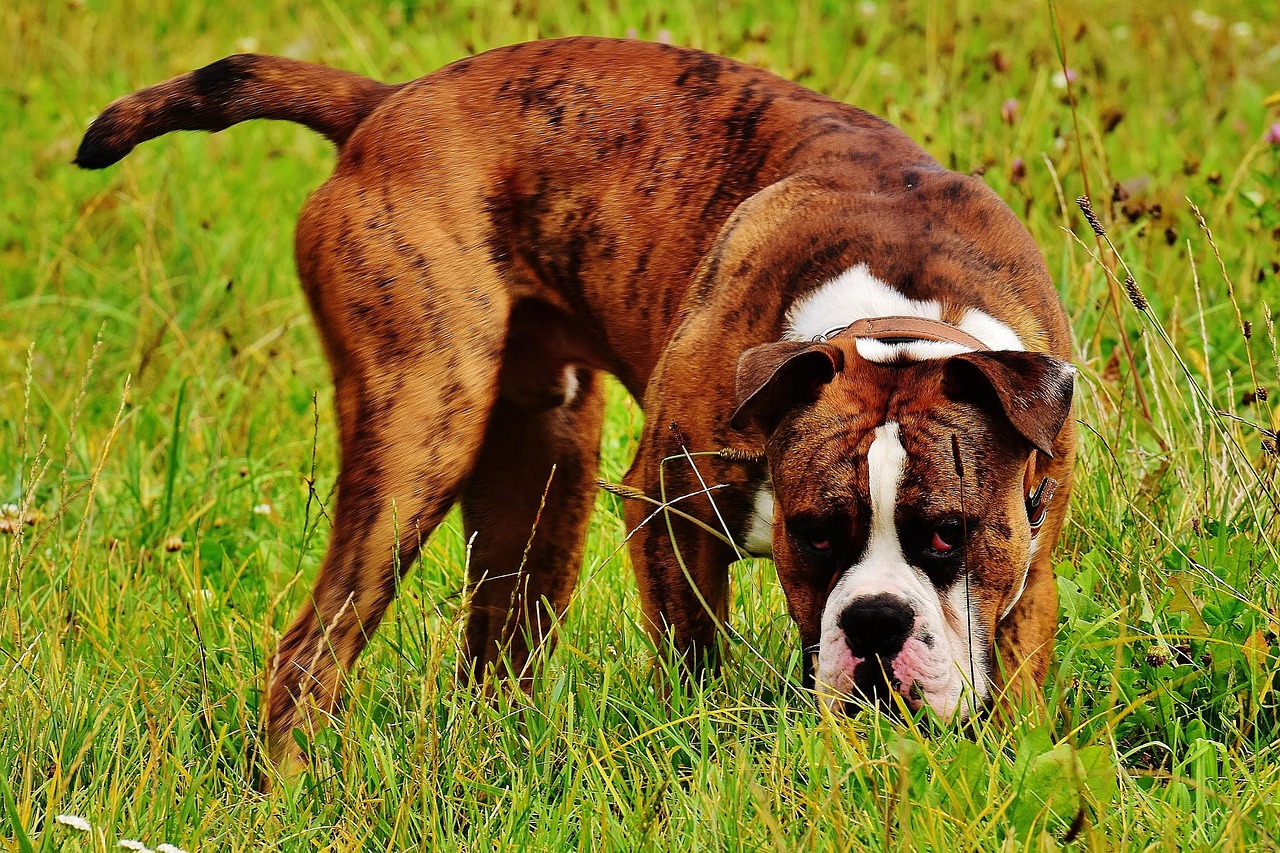
Coat and Color Patterns: Boxers have a short, smooth coat that lies tight against their body. The texture is somewhat firm and shiny, providing a neat, glossy appearance without requiring heavy grooming. The breed comes in a few standard color patterns. The most common colors are fawn and brindle. Fawn can range from a light tan or yellowish color to a deep reddish-brown, often referred to as mahogany. Brindle Boxers have a fawn background coat with distinctive black stripes running in the direction of the ribs; the striping can be sparse or thick (in some dogs the dark striping is so dense that the dog appears almost black—these are sometimes called “reverse brindle”). Many Boxers have white markings on parts of their body; a Boxer with significant white on the chest, face, or legs is often called a “flashy” Boxer. It’s important to note that while some white markings are common, a completely white Boxer is not a separate breed but a color variant that occurs in about 20-25% of Boxer puppies. Traditionally, breed standards consider an all-white coat or predominantly white coat as outside the desired norm for show dogs, but white Boxers can make just as loving and capable companions (however, they may have a higher risk of certain health issues like deafness). Most Boxers, regardless of coat color, have a distinctive black mask on their muzzle, which highlights their facial expression.
Distinctive Features: One of the most recognizable features of the Boxer is its head. The Boxer has a broad, blunt muzzle and a slightly upturned chin. This breed is classified as brachycephalic, meaning it has a short skull and muzzle relative to other breeds. The lower jaw extends slightly beyond the upper jaw (an underbite or prognathic jaw is a breed hallmark), which was historically useful for gripping prey. This underbite, coupled with a strong jaw and large jowls, gives the Boxer its characteristic “determined” expression. The forehead is typically wrinkled, especially when the dog is alert or curious, contributing to the Boxer’s expressive face. The ears of a Boxer are naturally medium-sized and drop forward, but in the past it was common to crop the ears to stand erect; today, many countries have banned ear cropping, and most pet Boxers keep their natural, floppy ears. The tail of the Boxer is set high and was traditionally docked (shortened) a few days after birth to prevent tail injuries and achieve a certain look. In modern times, tail docking is also banned or frowned upon in many regions, so you will see Boxers with natural long tails that often curl up when the dog is excited. Whether docked or not, a Boxer’s tail is very active and will enthusiastically wag when the dog is happy. The overall impression of a Boxer is that of a powerful yet elegant dog. With its keen alertness, muscular body, and distinctly engaging face (often described as simultaneously noble and comical), the Boxer’s appearance is both imposing and endearing.
Temperament and Personality
Playful and Energetic: Boxers are celebrated for their playful, exuberant nature. They often retain a puppy-like enthusiasm well into their adult years, sometimes earning the nickname “the Peter Pan of dog breeds” for their prolonged youthfulness. A Boxer is typically full of energy – they love to run, jump, and engage in games. It’s not unusual to see a Boxer doing its trademark “kidney bean dance,” a whole-body wag where they twist themselves into a semi-circle with joy when greeting their favorite people. Their boundless energy and sense of fun make them entertaining companions who will keep their family laughing. Whether it’s a game of fetch, a goofy romp in the yard, or clownish antics in the living room, Boxers know how to have a good time. This high energy means they do best with owners who can provide plenty of activity and play. Despite their boisterous play style, they are generally gentle with loved ones and can adapt their strength when interacting with small children or more fragile playmates (though supervision is always recommended with any large, energetic dog and young kids).
Intelligence and Trainability: The Boxer is a bright and intelligent breed, often noted for its alert expression and quick learning ability. These dogs usually grasp training concepts readily, especially when training is made engaging and fun. They have a working dog heritage which means they have been bred to respond to commands and perform tasks. Boxers often excel in obedience trials, agility, and other dog sports when properly motivated. However, their intelligence is paired with a bit of a stubborn or independent streak at times. A Boxer might decide to test boundaries or get distracted if something more interesting is happening. Therefore, training a Boxer requires consistency, patience, and a sense of humor. They respond best to positive reinforcement methods – praise, treats, and play as rewards will motivate a Boxer far more than harsh corrections. In fact, many Boxers are sensitive to their owner’s tone of voice and will shut down or become discouraged if treated harshly. Early training and socialization (introducing the puppy to various people, places, and other animals while young) are extremely important to harness the breed’s intelligence and curb their excitable nature. With a firm but fair training approach, Boxers can learn commands and house rules effectively, and they often take pride in performing tasks or tricks they’ve mastered.
Family Interaction and Other Pets: As family dogs, Boxers are hard to beat. They are famously affectionate and loyal with their human families. A well-raised Boxer is typically patient and protective with children, making them a popular choice for families with kids. They seem to understand that they need to be gentle with little ones, and their natural exuberance is often tempered around toddlers (though an excited Boxer might accidentally bowl over a small child simply due to size and enthusiasm, so supervision is wise). Many Boxer owners describe their dog as a “people dog” – these pups want to be where the family is, often following their owners from room to room and craving inclusion in activities. Boxers also tend to get along well with other pets in the household, especially if they are raised together. They can get along with other dogs and even cats, often viewing smaller pets as playmates. Early socialization helps ensure a Boxer will be friendly with animals outside the family as well. It’s worth noting that because of their playful, often rambunctious style, some other dogs might find a young Boxer a bit overwhelming. Proper introductions and supervised play can help. In general, though, the Boxer’s good-natured disposition shines through – they are neither inherently aggressive nor shy. They love to make friends, human or animal, and often approach life with an upbeat, curious attitude.
Protective Instincts and Guarding Ability: Along with their fun-loving side, Boxers have a natural protective instinct. They are known to be alert and will typically bark or stance up if a stranger approaches their territory. This makes them very good watchdogs – a Boxer will usually notice and let you know if something is amiss. They are brave dogs and, if they sense a true threat to their family, most will not hesitate to defend their loved ones. However, Boxers are not aggressive by default; they tend to be friendly with people once introduced properly and will often accept newcomers as friends if their owners demonstrate that the person is welcome. This balance of friendliness with a pinch of wariness toward strangers can be ideal for families who want a dog that is good with friends but will also be protective if needed. As a guard dog, a Boxer can be effective due to its intimidating stance and unwavering loyalty, though they may lack the intense territorial aggression seen in some traditional guard breeds. Many Boxers will deter intruders simply by their presence and bark, and their strong build gives them the capability to hold off a wrongdoer if it came to that. In summary, a Boxer’s temperament is one of confidence, high-spirited play, and devoted loyalty. They thrive in environments where they get plenty of human interaction and are given a role – whether as a playmate, a jogging partner, or a guardian of the home. With their upbeat personalities and deep bond to their families, Boxers truly embody the phrase “man’s best friend.”
Health and Common Concerns
Lifespan and General Health: Boxers are generally healthy, robust dogs, but like all breeds they have certain health tendencies to be aware of. The average lifespan of a Boxer is around 10 to 12 years. With good care, some Boxers do live to 12-14 years, though very old Boxers (beyond 14) are less common. Throughout their life, maintaining a healthy weight, proper exercise, and regular veterinary check-ups will help maximize a Boxer’s longevity and quality of life. Most Boxers remain active and playful even into their senior years, although owners will notice them slowing down a bit around age 8 or 9 as they enter their senior stage. It’s important for owners to be proactive about health because Boxers, being a brachycephalic and deep-chested breed, have a predisposition to certain issues.
Common Health Issues: Prospective Boxer owners should be informed about a few common health problems seen in the breed:
- Hip Dysplasia: This is a hereditary condition where the hip joint is malformed, leading to arthritis or lameness over time. In Boxers (as in many medium-large breeds), hip dysplasia can occur, causing discomfort and mobility issues. Responsible breeders often screen their breeding dogs with hip X-rays to reduce the incidence of this condition. Keeping a Boxer at a healthy weight and providing moderate exercise (not overworking young dogs while their joints develop) can help mitigate the effects on the hips.
- Heart Conditions: Boxers unfortunately are known for certain heart issues. One of the most common is aortic stenosis, a congenital heart defect where the aorta (the major artery from the heart) is narrowed, forcing the heart to work harder to pump blood. Mild cases may not show symptoms, but severe cases can cause fainting or even be life-threatening. Another heart issue in Boxers is arrhythmogenic right ventricular cardiomyopathy (ARVC), sometimes simply called Boxer cardiomyopathy. This is an electrical conduction problem of the heart that can cause irregular heartbeats and fainting. Regular veterinary check-ups, including listening for heart murmurs and possibly doing cardiac ultrasounds or ECGs if a problem is suspected, can help catch these conditions early. While these heart conditions can be serious, not all Boxers will develop them, and medications or lifestyle adjustments can manage some heart issues effectively.
- Cancer: Cancer is a leading cause of death in Boxers, particularly in their later years. The breed has a higher incidence of certain cancers like mast cell tumors (a type of skin cancer), lymphoma, and brain tumors, among others. Boxers, especially those with white or flashy coats, can also be prone to skin cancers due to sun exposure on light-pigmented skin. Owners should regularly check their Boxer for any unusual lumps or bumps and have them examined by a vet. Many cancers, if caught early, can be treated or removed. It’s a sad reality that Boxers have one of the higher cancer rates among dog breeds, so awareness and regular health screenings as they age are crucial.
- Brachycephalic Concerns: Because Boxers have a short muzzle (brachycephalic head shape), they can experience certain issues related to their facial structure. This includes snoring, snorting, and in some cases breathing difficulties, especially in hot and humid weather. Boxers don’t have as extreme a flat face as Bulldogs or Pugs, but owners should still be cautious about overheating. During exercise or in warm weather, Boxers can overheat more quickly than long-muzzled dogs since their panting is less efficient at cooling. They also might have trouble with strenuous exercise in high heat and may prefer to lounge in a cool spot. Additionally, some Boxers may have trouble with anesthesia during surgeries because of their airway anatomy, so it’s important to use a vet who is aware of brachycephalic breed considerations.
Other health concerns that can affect Boxers include hypothyroidism (low thyroid function leading to weight gain and skin issues), allergies (food or environmental allergies that can cause skin irritation), and degenerative myelopathy (a progressive spinal cord condition seen in older Boxers that causes hind end weakness). White Boxers, due to lack of pigment, have a higher chance of congenital deafness in one or both ears.
Maintaining Optimal Health: While the list of possible health issues can sound worrying, many Boxers live healthy lives, especially when provided with good care. Here are some tips for keeping a Boxer in top condition:
- Regular Veterinary Care: Schedule annual vet check-ups (or biannual for seniors) to monitor your Boxer’s health. Routine exams, blood work, and any recommended screenings (like hip X-rays or heart tests) can catch problems early. Follow your vet’s vaccination and parasite prevention recommendations to protect against diseases, and consider routine dental cleanings to keep teeth and gums healthy.
- Balanced Diet and Weight Management: Feed your Boxer a high-quality dog food appropriate for their life stage (puppy, adult, senior) and activity level. Boxers are active and muscular, so they need a good source of protein and nutrients. However, be careful not to overfeed – obesity can exacerbate hip problems and put strain on the heart. You should be able to feel (but not sharply see) your Boxer’s ribs. Divide meals into two portions per day (morning and evening) rather than one large meal, which can help prevent bloating and aid digestion.
- Exercise and Mental Stimulation: Providing regular exercise not only keeps a Boxer physically fit but also helps maintain a healthy cardiovascular system. Daily walks, play sessions, or runs will keep their weight in check and their heart strong. Mental stimulation through training and puzzles can reduce stress and destructive behaviors, promoting overall mental well-being. A well-exercised, mentally engaged Boxer is less likely to develop anxiety or bad habits that could impact their health (like chewing inappropriate objects or overeating out of boredom).
- Preventive Measures: Because Boxers can struggle in heat, always ensure they have access to shade and water when outdoors in warm weather. Avoid exercising during the hottest parts of the day and watch for any signs of overheating (excessive panting, weakness). In cold weather, remember they have a short coat with little undercoat, so they might benefit from a doggy sweater or jacket on very cold walks to prevent hypothermia. Also, consider pet insurance or setting aside an emergency fund – since Boxers have some propensity for health issues, being financially prepared can ensure you can give them the best care if a problem arises.
By staying attentive to their Boxer’s health and needs, owners can help their dog live a long, happy, and healthy life. The key is proactive care, a healthy lifestyle, and lots of love and attention.
Training and Exercise Needs
Training a Boxer: Training a Boxer can be a rewarding experience due to the breed’s intelligence and eagerness to please, but it does require commitment and consistency. Early training is recommended – starting in puppyhood with basic obedience and socialization classes can set the foundation for a well-behaved adult dog. Boxers are generally quick learners when they are engaged. To bring out the best in them, use positive reinforcement methods: reward good behavior with treats, praise, or a favorite toy, and keep training sessions upbeat and fun. Boxers have a bit of a clownish side and short attention span as youngsters, so training sessions should be kept relatively short (10-15 minutes at a time for young dogs) and end on a positive note. They respond well to games and variety in training, as repeating the exact same drill can bore them. A sense of humor helps; for example, if a Boxer suddenly does a “burnout” (a spontaneous mad dash) in the middle of training, it’s often best to let them get the zoomies out of their system, then calmly refocus on the lesson.
Challenges and Tips: One challenge in training Boxers is their strong, spirited personality – they can be a bit stubborn or willful if they think something else is more interesting than what you’re asking. They may also test boundaries as they mature, just to see what they can get away with. It’s important for the owner to be a confident, consistent leader. This doesn’t mean being harsh; it means setting clear rules and not giving in just because the Boxer gives you those sweet, soulful eyes. For instance, if you decide your Boxer is not allowed on the couch, enforce that rule every time so they understand the boundary. Training should also include a focus on good manners early on: Boxers are excitable greeters and often like to jump up in joy when seeing people. Teaching a Boxer to sit to greet or not to jump is important so they don’t accidentally knock someone over. Fortunately, because Boxers are so people-oriented, they usually genuinely want to please you and be a “good dog” – they sometimes just need to learn what that means. Socialization is another critical aspect: expose your Boxer puppy to different environments, people (including children and strangers), other dogs, loud noises, and various experiences in a controlled positive way. A well-socialized Boxer tends to be more confident and less likely to develop fear or aggression issues.
Exercise Requirements: Exercise is a must for a Boxer. This breed is high-energy and athletic, requiring daily activity to keep them physically and mentally satisfied. A Boxer should have at least one to two hours of exercise each day. This can be broken up into two walks (morning and evening) combined with playtime. Boxers love long walks, jogging, and running in a safe area. Many enjoy playing fetch, chasing a ball or frisbee, and they often relish a good romp in a fenced yard. Because of their strong chase instinct and playful nature, it’s best to exercise them in secure areas or on leash; a Boxer might joyfully run off after a squirrel or join a group of kids playing ball, not out of disobedience but sheer enthusiasm. In addition to walks and runs, give them opportunities for free play – this could be a play session with another friendly dog, or interactive games with their owners like tug-of-war (with rules in place), hide-and-seek, or agility exercises. Boxers also tend to excel in dog sports: agility courses let them burn energy while using their brains, and activities like flyball, obedience trials, or rally obedience can be great outlets for their energy and intelligence.
Mental Stimulation: Along with physical exercise, mental stimulation is very important for Boxers. An under-stimulated Boxer can become bored, and a bored Boxer might get into trouble (chewing furniture, digging holes, or other destructive behavior to entertain themselves). To keep their minds sharp, engage them in training new commands or tricks regularly – Boxers can learn a wide array of fun tricks, from basic ones like “shake” or “speak” to more complex tasks like fetching specific objects. Puzzle toys and food-dispensing toys can occupy a Boxer when you need them to be busy on their own; these challenge them to solve a problem to get a treat, which can tire them out mentally. Rotating their toys so they don’t get bored of the same ones can also help. Some Boxers love tasks that give them a sense of purpose, like carrying a doggy backpack on a walk or helping you by holding or fetching items (they have been known to happily carry the newspaper or bring you a dropped remote control).
Consistency and Enrichment: It’s also beneficial to keep a consistent routine. Boxers tend to do well when they know roughly when to expect walks, meals, playtime, and rest. That said, throwing in variety within the exercise routine keeps it interesting – perhaps a hike or a trip to a dog park on occasion. Remember that because of their short snout, Boxers should not be pushed to exercise in extreme heat; on hot days, opt for gentle walks during cooler parts of the day and incorporate water play (many Boxers enjoy splashing in a shallow kiddie pool). In summary, a Boxer with adequate exercise and training is generally a well-behaved and happy Boxer. Their motto could be “a tired Boxer is a good Boxer” – if their energy is positively channeled, they will be content to relax calmly with the family afterward. With the right balance of physical activity, mental challenges, and loving guidance, Boxers become wonderfully obedient and fun companions.
Grooming and Care
Coat Care and Shedding: One of the convenient aspects of the Boxer dog is its low-maintenance short coat. Grooming a Boxer’s coat is relatively easy compared to many other breeds. Boxers do shed moderately, with most of their shedding being constant, light shedding year-round (they do not have a heavy seasonal shed like some double-coated breeds). To keep their coat in top condition and minimize loose hair around the house, a simple weekly brushing will do wonders. Using a soft bristle brush or a rubber grooming mitt helps remove dead hairs and distribute skin oils, keeping the coat shiny and healthy. Brushing not only helps with shedding but is also a nice massage for the dog and a bonding time with your pet. Boxers generally have clean habits and don’t have a strong doggy odor, so they only need an occasional bath – perhaps once every 2-3 months, or when they get dirty. Over-bathing can dry out their skin, so it’s best to use a gentle dog shampoo and not bathe more than necessary. After outdoor adventures, a quick wipe-down with a damp cloth can remove dust or pollen from their coat (helpful especially for Boxers with allergies).
Skin and Wrinkle Care: Because Boxers have some wrinkling on their face, particularly the forehead and around the muzzle, it’s important to keep those areas clean. Face folds and the flaps of skin around the muzzle (often called the “flews”) can trap moisture, drool, or bits of food. Wipe your Boxer’s face gently with a damp cloth or a pet wipe, especially after meals or outdoor play, to clean any dirt or saliva from the wrinkles. This will help prevent skin irritation or infections in those folds. Many Boxers drool a bit, especially on a hot day or in anticipation of food; keeping a cloth handy to dab their mouth can keep them tidy.
Ears, Eyes, and Nails: Regular ear care is important for Boxers, particularly if they have natural floppy ears. Check their ears weekly for any signs of redness, bad odor, or excessive wax, which could indicate an infection. You can clean the outer ear gently with a cotton ball lightly moistened with a vet-approved ear cleaner (never stick cotton swabs deep into the ear canal). Keeping the ears clean and dry will prevent bacterial or yeast infections. The Boxer’s eyes should be clear and bright; occasionally, they may have a bit of discharge in the corners of their eyes, which can be wiped away with a soft, damp cloth. Watch out for any persistent eye redness or irritation – Boxers can be prone to an eye condition called cherry eye (prolapsed third eyelid gland) or occasional entropion (eyelids rolling inward), though those are not extremely common. Nail trimming is another aspect of care: active Boxers that run on various surfaces may naturally wear their nails down, but it’s good practice to check their nails every few weeks and trim them if they get too long. Overgrown nails can break or cause discomfort while walking. If you can hear nails clicking on the floor, it’s time for a trim. Many Boxers are not fond of nail trims, so early acclimation and using rewards can make this easier.
Dental Care: Like all breeds, Boxers benefit from regular dental care. Their strong jaws love to chew, which is actually helpful for keeping teeth clean if they have appropriate chew toys. Providing safe, sturdy chew toys or dental chews can help reduce tartar buildup. In addition, aim to brush your Boxer’s teeth with a dog-specific toothpaste a few times a week to prevent dental disease and keep that Boxer smile bright. Good dental hygiene contributes not just to fresh breath but to overall health, as poor dental health can lead to other systemic issues.
Diet and Nutrition: Proper nutrition is key to a Boxer’s health and well-being. Feed your Boxer a balanced, high-quality dog food that meets their nutritional needs. Many reputable dog food brands offer formulas for active breeds or specific life stages (puppy, adult, senior). Boxer puppies should be fed a puppy formula to support their growth – typically three meals a day when very young, reducing to two meals by six months of age. Adult Boxers generally do well on two meals per day, as mentioned earlier, to avoid overeating in one go and to prevent bloat. The exact amount of food will depend on your dog’s size, age, and activity level, so following the guidance on the food label and adjusting for your individual Boxer’s condition is wise. You should be able to feel your Boxer’s ribs under the skin but they shouldn’t be visibly protruding (too thin) nor hidden under fat (too heavy). Treats can be a great training aid and bonding tool, but be careful not to overindulge – treats should make up no more than about 10% of their daily caloric intake to avoid weight gain. Choose healthy treats or even some dog-safe fruits and veggies (like carrot sticks or apple slices) for low-calorie options. Boxers are known to have sensitive stomachs at times; some might be prone to food allergies or intolerances. If you notice chronic digestive upset or skin issues, consult with a veterinarian – a special diet or hypoallergenic food might be needed. Also ensure your Boxer has constant access to fresh, clean water, especially given their activity level and tendency to pant. Hydration is important for their overall health and to help regulate body temperature.
Environment and Lifestyle: Caring for a Boxer also involves providing the right environment. Boxers are indoor dogs in the sense that they thrive being around their family and do not do well being isolated in a backyard or kennel for long periods. Their short coat and brachycephalic nature also mean they should not be left in extreme weather conditions – too cold, and they can get chilled; too hot, and they can overheat. They should live inside the home as a member of the family, with regular outings for exercise and play. Because they are curious and strong chewers, it’s wise to “puppy-proof” your home for a Boxer, especially during the juvenile stages: keep trash cans secured, dangerous objects or chemicals out of reach, and provide plenty of chew toys so they are less tempted to gnaw on furniture or personal items. Crate training can be useful for when you’re not able to supervise, as most Boxers take well to having a cozy den-like crate to relax in – just ensure it’s introduced positively and never used as a punishment.
In summary, the grooming and care of a Boxer is not overly demanding, but it does require regular attention to keep them looking and feeling their best. By keeping up with coat care, hygiene, proper diet, and a suitable living environment, you’ll have a healthy, happy Boxer with a sleek coat, bright eyes, and a wiggly tail (or nub) that shows their joy. The routine care also doubles as quality time and strengthens the bond between you and your Boxer, which is something this people-loving breed thrives on.
Pros and Cons of Owning a Boxer
Every dog breed has its advantages and challenges, and the Boxer is no exception. If you’re considering adding a Boxer to your home, it’s important to weigh the pros and cons to ensure this breed is the right fit for your lifestyle.
Pros of Owning a Boxer:
- Loyal and Affectionate: Boxers form deep bonds with their families. They are extremely loving and often called “shadows” because they like to be by your side. Their loyalty makes them wonderful companions who will give you endless affection and devotion.
- Great with Children: When properly socialized and trained, Boxers are famously good with kids. Their patient, fun-loving nature often makes them a child’s best playmate. They have the energy to keep up with active children and can be very gentle and protective of the little ones in their family.
- Playful and Entertaining: A Boxer will fill your life with laughter thanks to their goofy antics and playful personality. They are natural clowns and enjoy entertaining their humans, whether it’s by doing zoomies around the yard or making silly faces. There’s rarely a dull moment with a Boxer in the house.
- Protective Watchdog: With their alertness and protective instincts, Boxers make effective watchdogs. They will bark to alert you of strangers or unusual activity around your home. Their imposing stance and confident demeanor can be a deterrent to potential intruders, giving owners a sense of security.
- Intelligent and Trainable: Boxers are smart dogs that, with the right approach, can learn a wide variety of commands and tricks. Many excel in obedience, agility, and even work as service or therapy dogs. Their versatility is a plus for owners who want a dog that can participate in different activities or dog sports.
- Low-Maintenance Coat: Grooming a Boxer is relatively easy. They have a short coat that doesn’t mat or tangle, and they only require minimal brushing and infrequent baths. For people who want a cleaner dog with less doggy odor and no need for haircuts, the Boxer’s coat is a bonus.
- Athletic and Energetic: If you lead an active lifestyle, a Boxer can be a great partner. They love to join their owners for walks, runs, and outdoor adventures. Their athleticism also means they can excel in canine sports or make great exercise buddies, keeping you active as well.
Cons of Owning a Boxer:
- High Energy Needs: The Boxer’s exuberance means they require a lot of exercise and stimulation. They are high-energy dogs that can become hyperactive or mischievous if not given enough physical activity. Owners need to dedicate time every day for walks, play, and training. A bored or under-exercised Boxer may resort to chewing, digging, or other unwanted behaviors to burn off energy.
- Requires Training and Socialization: Without proper training, a strong and excitable Boxer can be a handful. Their jumping, pulling on leash, or overly enthusiastic greetings can be problematic if not addressed. Consistent obedience training and early socialization are necessary to channel their energy and ensure they are well-behaved. This may be challenging for a first-time dog owner who isn’t prepared for a powerful, bouncy pup.
- Not Ideal for Inactive Lifestyles: If you prefer a quiet, low-energy pet or if you have a very sedentary lifestyle, a Boxer might not be the best match. They thrive on activity and interaction; they aren’t the type of dog who will be content just lounging around all day without anything to do. Owners who are frequently away or who can’t commit to regular exercise sessions could find a Boxer becoming restless or unhappy.
- Health Issues and Expenses: As noted, Boxers can be prone to certain health problems (heart issues, cancers, hip dysplasia, etc.). Vet bills for larger breeds like Boxers can add up, especially if they develop a chronic condition or require surgery. Prospective owners should be aware of the potential for higher medical expenses over the dog’s life and the emotional toll of dealing with health issues. Pet insurance might be worth considering for this breed.
- Short Muzzle Considerations: The Boxer’s flat-ish face means they may snore or snort, which some people find endearing, but others might find it noisy at night. They can also be messy drinkers (water tends to drip from those jowls) and drool occasionally, particularly when excited or after drinking water. If you are very fastidious about home cleanliness, a Boxer’s tendency to sling drool or shed short hairs might be a minor annoyance.
- Short Coat in Cold Weather: Because of their short, single coat, Boxers are not well-suited to living outdoors or in cold climates without protection. They feel the cold more than thicker-coated breeds and may need sweaters or jackets in winter. They also should never be left outside in freezing conditions for long. For those looking for an outdoor-only dog, a Boxer is not a good choice – they really need to be inside with their family.
- Potential Dog Aggression: While many Boxers get along fine with other dogs, there is a potential (particularly in some male Boxers) for same-sex dog aggression or dominance issues if not well socialized. This isn’t unique to Boxers and isn’t true for all, but an owner should be mindful of proper introductions with new dogs. A poorly socialized Boxer might be too rowdy or occasionally confrontational with other dogs.
In weighing these pros and cons, remember that individual dogs may vary. Many potential “cons” can be managed or mitigated with responsible ownership – for example, training can curb jumping, and exercise can channel energy. Likewise, the “pros” of a Boxer shine brightest when the dog is raised in a loving, stimulating environment. For the right owner, the Boxer’s positive traits will far outweigh the challenges, but it’s wise to consider both sides before committing to the breed.
Is the Boxer Right for You?
Bringing a Boxer into your life can be an incredibly rewarding experience, but it’s important to make an honest assessment of how this breed’s characteristics align with your lifestyle and expectations. The Boxer is best suited for individuals or families who can meet the breed’s needs for exercise, training, and companionship. If you are looking for a dog that will be a true part of the family – joining in activities, providing endless amusement, and offering steadfast loyalty – the Boxer could be an excellent choice.
Ideal candidates for a Boxer owner are those who lead at least a moderately active life. You don’t need to be a marathon runner, but you should enjoy daily walks, playtime, or outdoor activities, as your Boxer will want to be by your side for those. A fenced yard is a bonus for off-leash play, though not strictly required if you commit to other forms of exercise. Time is a crucial factor: Boxers thrive on attention and interaction. They do not do well left alone for long stretches day after day. If your household has people around at various times (for example, a family with staggered work/school schedules or someone who works from home), a Boxer will be happier than if left isolated for 8+ hours every weekday. For those who are away often or travel frequently without the dog, consider whether you have the resources (dog walkers, doggy daycare, etc.) to keep a Boxer engaged and cared for in your absence.
The home environment should be one that can accommodate an energetic, sometimes bouncy dog. Apartments or condos can work for Boxers, provided the owner is diligent about giving ample exercise outside and mental stimulation inside. However, a small apartment with thin walls might be challenging if your Boxer tends to bark at noises or if space is too tight for them to move around. In a house with a yard, a Boxer will enjoy the space but should still live indoors as part of the family. Boxers are not suited to extreme temperatures, so climate considerations are worth noting – if you live in very hot and humid areas, you’ll need to be cautious about heatstroke, and in very cold areas, you’ll need doggy jackets and limited exposure in winter.
If you have children, a Boxer can be a fantastic family dog. Just be ready to supervise play and teach both the child and the dog how to interact respectfully (e.g., no ear or tail pulling, and the dog learns not to jump up on the child). In many cases, the bond between a child and a Boxer becomes something truly special – Boxers often seem to understand they need to be gentle with little family members. With other pets, as long as the Boxer is introduced properly and socialized, they usually integrate well. They often enjoy having another dog as a playmate, especially one that can match their energy.
First-time dog owners can successfully own a Boxer, but they should be prepared to invest time in training and educating themselves about dog behavior. Joining a puppy training class or working with a professional trainer can be very helpful. The Boxer’s physical strength and exuberance mean that an owner should be ready to put in the work to guide that energy positively. If you are someone who values a clean, orderly home above all and can’t tolerate a bit of chaos, a Boxer might test your patience – remember, they are playful and might track in mud or knock over a knickknack with a wagging tail. But if you can roll with the punches (or rather, with the “boxing” paws and happy wiggles), you will find the Boxer’s zest for life contagious.
In conclusion, the Boxer is a loving, lively, and loyal breed that brings immense joy to the right home. They are a blend of clownish fun and courageous protector wrapped into one dog. Potential Boxer owners should be ready for an active dog that needs training, exercise, and plenty of affection. If you are willing to meet those needs, you’ll earn a faithful friend who will greet you every day with a wiggling body and a heart full of devotion. Is the Boxer right for you? If you seek a family-friendly dog that will keep you active, make you laugh, and stand by you through thick and thin, then the answer might well be yes – a Boxer could be your perfect canine companion.