Meet the Devon Rex Cat: The ‘Alien’ Pet Taking Over the Internet!
| Characteristic | Details |
|---|---|
| Height | 10 – 12 inches |
| Weight | 6 – 9 pounds |
| Lifespan | 9 – 15 years |
| Colours | White, black, blue, lilac, chocolate, cinnamon |
| Suitable for | Minimal shedding, ideal for indoor-only homes, and perfect for apartment living. |
| Temperament | Curious, engaging, sociable, and highly intelligent. |
Devon Rex Cat: The Ultimate Feline Companion
Quick Summary
The Devon Rex cat is unlike any other feline breed you’ve encountered. This breed captures hearts and imaginations worldwide with its playful face, oversized ears, and curly coat. Known for its friendly nature and boundless energy, the Devon Rex is an excellent companion for families, individuals, and other pets. What sets the Devon Rex apart is not just its distinct appearance but also its engaging personality. These cats thrive on interaction, constantly seeking attention and affection from their human companions.
In this in-depth review, we’ll explore every unique aspect of the Devon Rex. From its history and distinctive physical features to its playful temperament and low-maintenance grooming, this article will give you a comprehensive look at why the Devon Rex is a perfect choice for a lively household. Whether you’re new to cat ownership or a seasoned pet lover, this playful, affectionate breed will add joy to your life.
Table of Contents
- The Origins of the Devon Rex: A Magical Beginning
- Distinctive Features of the Devon Rex
- Devon Rex: A Bundle of Personality
- Health and Longevity: What to Expect
- Living with a Devon Rex: Perfect for Active Families
- Caring for Your Devon Rex: Grooming, Diet, and Exercise
- Why the Devon Rex is a Perfect Companion for All Ages
- Conclusion: A Playful Heart in a Curly Coat
- FAQ: Common Questions About the Devon Rex
1. The Origins of the Devon Rex: A Magical Beginning
The story of the Devon Rex begins with an air of mystery and uncertainty in the quiet English countryside. The breed’s roots can be traced back to the late 1950s in Devonshire, England, known for its lush landscapes and rural charm. However, what makes this origin story genuinely magical is the almost accidental discovery of a curious and distinctive cat that would change the world of feline breeding forever.
In 1960, a woman named Beryl Cox noticed an unusual kitten in a litter born to a stray cat in her care. The kitten stood out immediately due to its curly coat, oversized ears, and impish face, unlike any of the other typical kittens in the litter. This strange kitten, later named Kirlee, would become the founding father of the Devon Rex breed. Kirlee’s curly fur resulted from a natural genetic mutation. This rare event marked the beginning of this new and exciting breed.
Intintrigued by Kirlee’s unique appearance, Cox sought to explore his curly coat’s genetic origins. At the time, a similar breed called the Cornish Rex had already been established, originating from nearby Cornwall. Cox contacted Cornish Rex breeders, hoping Kirlee’s mutation might be related to their own cats. However, breeding Kirlee with Cornish Rex cats revealed a fascinating discovery. Despite their shared location and wavy coats, the genetic mutations responsible for their curly fur were entirely different. The Cornish and Devon Rex had distinct mutations that gave rise to their signature look.
The genetic anomaly that Kirlee carried was identified as a spontaneous mutation in the KRT71 gene, which governs the structure of the hair shaft. While the Cornish Rex mutation produced soft, even waves across the coat, the Devon Rex’s mutation resulted in a more textured, tousled appearance. This discovery marked the official distinction between the two breeds and solidified the Devon Rex’s place in the feline world.
Though the breed began with one quirky kitten, Devon Rex enthusiasts took only a short time to emerge. Breeders recognized the potential of Kirlee’s unique traits and sought to establish a formal breed standard. Through careful breeding programs, Kirlee’s genes were passed down to future generations, ensuring that the Devon Rex’s signature look and personality would thrive.
In 1967, the Devon Rex was officially recognized by the Governing Council of the Cat Fancy (GCCF) in the UK, making it an established breed. From there, the breed’s popularity spread, gaining worldwide recognition from major cat organizations, including the Cat Fanciers’ Association (CFA) in the United States.
What’s truly magical about Devon Rex’s beginnings is the fate of Kirlee’s birth. Had Beryl Cox not been observant and curious about that little kitten’s unusual features, we may never have had the chance to enjoy the delightful Devon Rex breed we know today. This unexpected genetic twist led to the creation of a breed that has captured the hearts of cat lovers around the globe, making the Devon Rex one of the most cherished and recognizable cat breeds in the world.
The breed’s origins also speak to the beauty of nature’s unpredictability. Genetic mutations are often seen as accidents, but in the case of the Devon Rex, it was a fortunate accident that gave rise to a playful, affectionate, and utterly unique breed. To this day, the Devon Rex is celebrated for its striking appearance and extraordinary history, which began with one serendipitous kitten in a small corner of Devonshire.
2. Distinctive Features of the Devon Rex
The Devon Rex is one of the most visually striking and unusual cat breeds in the world, boasting a variety of unique physical traits that set it apart from others. While many people are captivated by their peculiar yet adorable appearance, the breed’s distinctive features go far beyond what meets the eye. Their elfin look, athletic build, and playful demeanour create an irresistible charm. Let’s dive deeper into the Devon Rex’s physical characteristics and what makes them unique.
A Captivating Face: Big Ears and Large Eyes
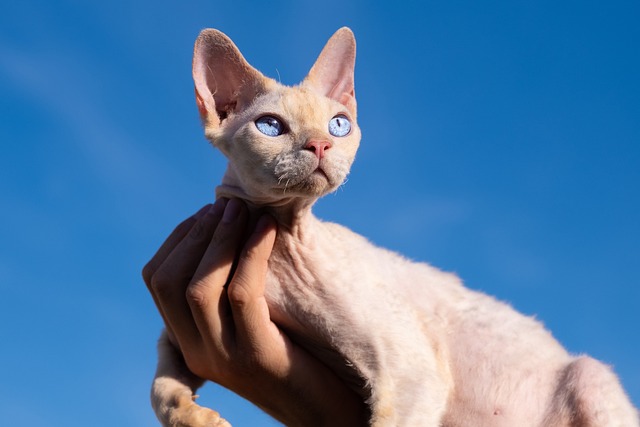
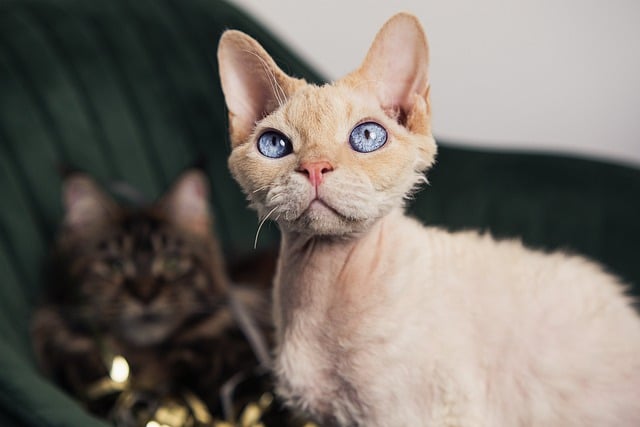
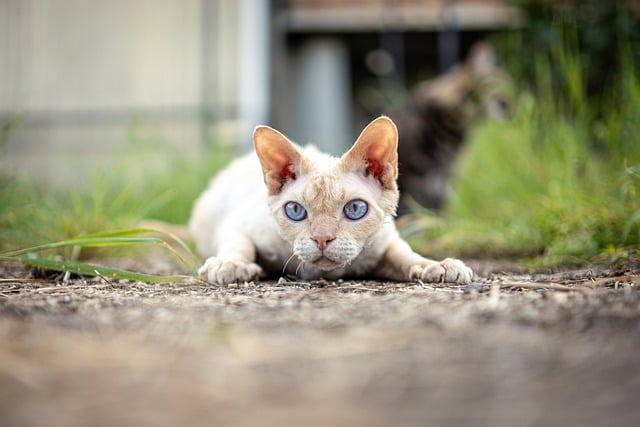
When you first encounter a Devon Rex, the most noticeable feature is often their oversized ears. Perched high on their heads, these ears are extensive, broad at the base, and set low, giving them a bat-like or even “alien” appearance that adds to their otherworldly charm. Unlike many cat breeds, whose ears may sit neatly atop the head, the Devon Rex’s ears seem to dominate its face, giving the cat a whimsical and endearing look.
Another defining feature is their large, expressive eyes. Typically oval-shaped, Devon Rex’s eyes are often described as soulful or impish, lending them a curious, almost human-like quality. Depending on their coat colour, the eyes come in various colours, ranging from brilliant greens and gold to icy blues. These captivating eyes seem to exude Devon Rex’s playful and mischievous personality, often giving the impression that they are always up to something fun or ready for their next adventure.
The breed’s facial structure also adds to its distinctive look. With pronounced cheekbones and a short, broad nose, the Devon Rex has an almost elfin or pixie-like appearance. The combination of prominent ears, big eyes, and defined facial features gives the breed an unforgettable and unique expression that is playful yet alert.
The Coat: Soft, Curly, and Unique
One of the most famous traits of the Devon Rex is its unusual curly coat. Unlike most cats, whose fur consists of multiple layers of dense hair, the Devon Rex has a short, wavy coat primarily of fine-down hair. This lack of an undercoat gives their fur a soft, velvety texture that feels delightful. When you stroke a Devon Rex, you’ll notice how different their coat feels compared to other breeds—light, airy, and almost like petting a plush toy.
The curls in Devon Rex’s coat are not uniform. Some areas may have looser waves, while others are tighter, creating an overall tousled and “lived-in” look. This variation in texture is one of the breed’s most endearing qualities. The fur on their bodies can appear sparse in places, and some Devon Rex cats may even have bald patches due to their fine hair. However, this quirk only adds to their individuality and charm.
Another fascinating feature is the Devon Rex’s whiskers—or, in many cases, their lack. While most cats have long, straight whiskers, the Devon Rex’s whiskers are often short, curly, or even absent. This occurs due to the same genetic mutation that affects their coat. Though some people may find this feature surprising, it doesn’t affect the cat’s ability to navigate or sense its surroundings. It only enhances their unique appearance.
The coat of a Devon Rex also comes in a wide variety of colours and patterns. From solid colours like black, white, and blue to more intricate patterns such as tortoiseshell, tabby, and calico, the Devon Rex’s fur can be as varied as its personality. Each colour and pattern enhances the breed’s distinctive look, giving them even more visual appeal.
Slim Yet Athletic Build
Though the Devon Rex may appear delicate or even fragile at first glance due to their slim frame and light coat, they are far from it. Beneath their soft exterior lies a muscular, athletic body built for agility and speed. Their bodies are medium in size, with a well-developed chest and long, slender legs that allow them to jump to impressive heights. This breed is incredibly active, often seen leaping onto high surfaces or darting around the house with boundless energy.
Their long, slender limbs contribute to their graceful movements. Despite their slim build, Devon Rex cats are muscular and carry themselves with an athletic poise. There’s a sense of agility and strength when they move, making them natural climbers and jumpers. You’ll often find them perched on the highest shelves or observing the room from a lofty position.
The Devon Rex’s tail is another distinctive feature. It is long and slender with a slight taper at the end. The tail is covered in the same soft, curly fur as the rest of the body, and the Devon Rex often uses it expressively, whether twitching in excitement or gently swaying while they observe their surroundings. The tail adds to their elegant and graceful appearance, providing balance when they engage in their high-flying antics.
Feet and Paws: Delicate Yet Strong
A closer look at the Devon Rex’s paws reveals a surprising combination of delicacy and strength. Their paws are small and oval-shaped, which adds to their elfin-like appearance. Despite their petite paws, these cats are incredibly nimble and agile. They use their strong legs and tiny feet to leap effortlessly onto shelves, cat trees, and countertops. Their ability to move gracefully and precisely despite their slender build makes them natural-born climbers and explorers.
Devon Rex cats also use their paws in surprisingly dexterous ways. They often use their paws to pick up toys or food, a behaviour not commonly observed in all breeds. Their playful nature usually extends to batting at objects or pawing at their humans, showing off their delicate yet purposeful movements.
A Distinctively Silhouetted Head
The Devon Rex’s head shape adds to its allure. With its short, wedge-shaped skull and flat-topped head, its face is a delightful mix of angular lines and soft curves. Its wide-set eyes, set beneath its pronounced cheekbones, give it an eternally inquisitive and alert look. Combining a short muzzle and broad forehead further enhances the breed’s pixie-like appeal.
Additionally, their short, straight nose sits perfectly between their prominent eyes, often giving the impression that they are always curious about their surroundings. Many people describe the Devon Rex as having an almost “impish” appearance. This mischievous expression perfectly complements their lively and playful personality.
A Curly Coat with Minimal Shedding
One of the most appreciated physical traits of the Devon Rex is its low-shedding coat. Unlike many other cats with dense fur, Devon Rex cats shed very little due to their thin jacket. This makes them a popular choice for people who prefer minimal cat hair in their homes. However, it’s important to note that while the Devon Rex may shed less, they still produce dander, so they may not be entirely hypoallergenic for everyone.
Reduced shedding is one of the reasons many people opt for a Devon Rex, especially if they have concerns about allergens or cleaning up excessive fur. Their thin coat, combined with the soft curls, offers the best of both worlds—a low-maintenance and visually unique cat.
The Devon Rex’s distinctive features—from its oversized ears and large eyes to its curly coat and athletic build—make it one of the most enchanting and unique cat breeds in the world. Its physical traits captivate with its beauty and perfectly complement its lively, affectionate personality. The Devon Rex’s look is a delightful blend of elegance and playful charm, offering a feline companion that is as visually striking as it is entertaining.
3. Devon Rex: A Bundle of Personality
If there’s one word to describe the Devon Rex, it’s playful. This breed is known for its outgoing and affectionate personality. Devon Rex cats are amiable and love to be the centre of attention. They are often described as more “dog-like” than most cat breeds, following their owners around and engaging in activities many felines typically avoid.
The Devon Rex is also knowledgeable and curious. These cats are quick learners and enjoy puzzles, toys, and challenges that stimulate their minds. Don’t be surprised if your Devon Rex figures out how to open cabinets or drawers—they’re natural problem solvers.
One of the Devon Rex’s most charming aspects is its love for human companionship. These cats thrive in households where they can interact with people frequently. They’ll happily curl up in your lap, join you in bed, or follow you around the house, always eager to be near their favourite humans.
4. Health and Longevity: What to Expect
Like any breed, the Devon Rex has specific health considerations. On average, a Devon Rex can live between 12 and 15 years, with some living even longer with proper care. However, as with all cats, they are susceptible to certain hereditary health conditions. Some common issues include patellar luxation, a condition where the kneecap slips out of place, and hypertrophic cardiomyopathy, a form of heart disease that can affect some cats.
Maintaining regular veterinary checkups is essential to catch any potential health issues early. Additionally, feeding your Devon Rex a balanced diet and regular exercise will help them live a long, healthy life.
5. Living with a Devon Rex: Perfect for Active Families
If you’re an active family looking for a cat that can keep up with your lifestyle, the Devon Rex is an excellent choice. This breed loves to be involved in whatever is happening around the house. Whether chasing toys, climbing cat trees, or simply sitting by your side as you go about your day, the Devon Rex is always eager to be part of the action.
The Devon Rex also gets along well with children and other pets, making it a versatile choice for multi-pet households. They’re particularly fond of playing with other cats or even dogs, often engaging in games of chase or wrestling matches. Their friendly and adaptable nature makes them an excellent addition to any family setting.
6. Caring for Your Devon Rex: Grooming, Diet, and Exercise
One of the advantages of owning a Devon Rex is that their short, curly coat requires minimal grooming. Unlike long-haired breeds, the Devon Rex doesn’t shed much, making them a low-maintenance choice for cat lovers who want to avoid excessive fur around the house. A gentle brushing once a week is usually enough to keep their coat looking neat.
While grooming is straightforward, it is important to pay attention to their sensitive skin. Their lack of a thick undercoat makes them more prone to sunburn, so outdoor exposure should be limited. Regular ear cleaning is also essential, as their large ears can accumulate wax more easily.
The Devon Rex has a healthy appetite and enjoys a balanced diet of high-quality cat food. Given their energetic nature, they require meals that provide ample protein and nutrients. Regular play and exercise are also essential to stimulate them mentally and physically.
7. Why the Devon Rex is a Perfect Companion for All Ages
Whether you’re a single individual, a family with children, or an elderly couple, the Devon Rex is the ideal companion for all age groups. Their affectionate and adaptable nature makes them equally home in a bustling or quiet household. For seniors, they offer the perfect blend of companionship and entertainment, often brightening up the day with their playful antics.
Children will find a devoted playmate in the Devon Rex. These cats are patient and gentle, making them excellent companions for younger family members. Furthermore, their friendly nature means they’ll enjoy the extra attention from children, always ready for a game or a cuddle.
8. Conclusion: A Playful Heart in a Curly Coat
The Devon Rex is a breed like no other. With their captivating looks, lively personality, and endless affection, they are the perfect feline companions. Whether you’re looking for a cat to join your family or to be your constant companion, the Devon Rex will bring joy and laughter into your home. Their unique appearance is matched by an even more unique personality that makes them unforgettable.
This breed doesn’t just fill your home with love—they fill it with life, energy, and endless entertainment. If you’re ready for a cat that will follow you, keep you smiling, and provide warmth on chilly nights, the Devon Rex might be your ideal match.
9. FAQ: Common Questions About the Devon Rex
Q: Are Devon Rex cats hypoallergenic?
A: While no cat breed is entirely hypoallergenic, the Devon Rex’s short, curly coat produces less dander than many other breeds, making it a good option for some allergy sufferers.
Q: Do Devon Rex cats get along with other pets?
A: Yes! Devon Rex cats are highly sociable and usually get along well with other pets, including cats and dogs. Their playful nature often makes them a great companion for other animals.
Q: How much exercise does a Devon Rex need?
A: Devon Rex cats are very active and benefit from regular playtime. Providing them with toys, cat trees, and climbing opportunities will keep them healthy and happy.
Q: What is the life expectancy of a Devon Rex?
A: On average, a Devon Rex can live between 12 and 15 years. With good care, some have been known to live even longer.
Q: Do Devon Rex cats require special grooming?
A: Their short coat requires minimal grooming. However, regular ear cleaning is important because their large ears can accumulate wax more easily.
The Devon Rex is an enchanting breed bound to win your heart with its playful, affectionate nature and striking looks. Whether you are looking for a lively pet or a loving companion, the Devon Rex will surely exceed your expectations.